Notes
seven squares solution
Solution to the Seven Squares Puzzle
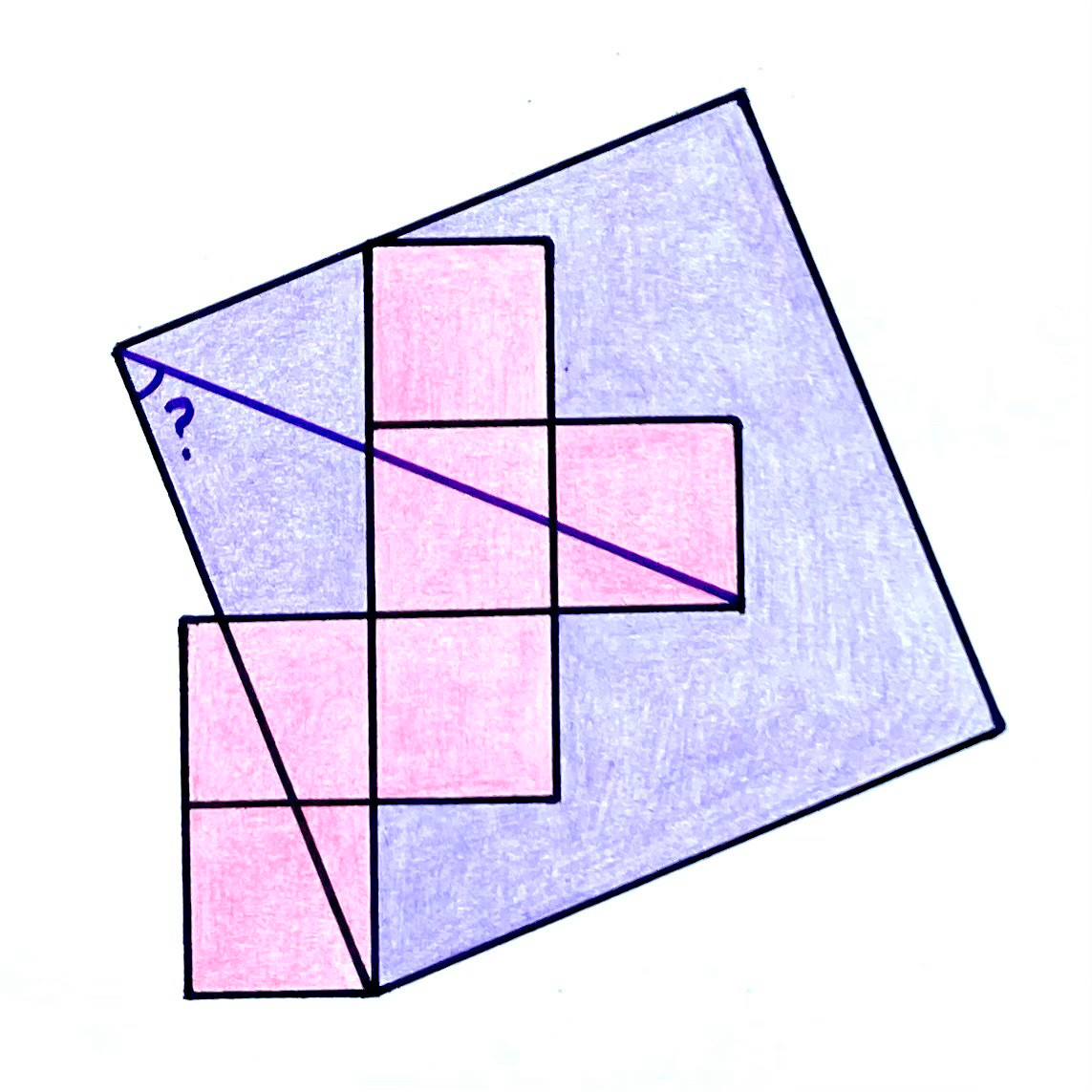
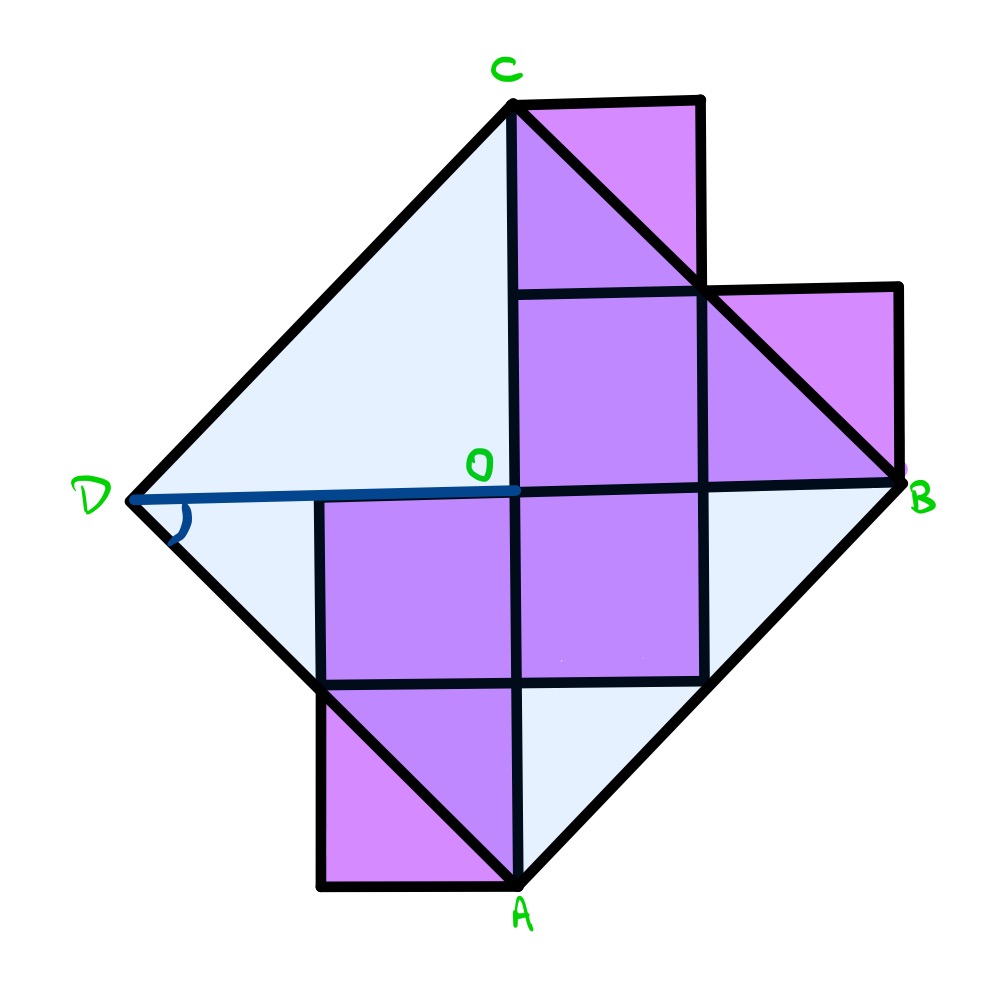
Seven squares. What’s the angle?
Solution by Angle in a Semi-Circle and Angle at the Circumference is Half the Angle at the Centre
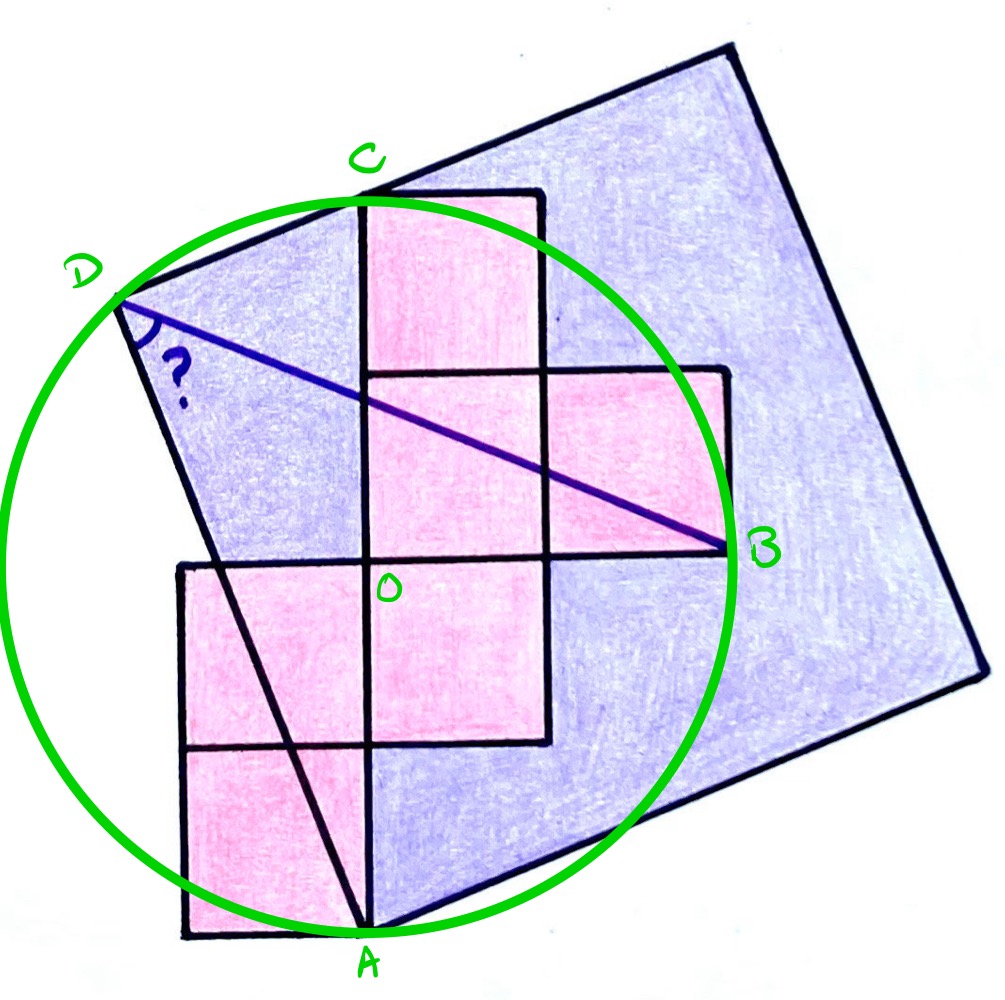
With the points labelled as above, consider a circle centred on which passes through . Since the pink squares are all the same size, , , and all have the same length and therefore the circle also passes through and .
Triangle is a right-angled, since is the corner of the purple square. Therefore, as the angle in a semi-circle is a right-angle, also lies on the same circle.
Then as the angle at the circumference is half the angle at the centre, angle is half of angle , but this is the corner of a square and so is .
Therefore, angle is .
Solution by Isosceles Triangles and Angles in a Quadrilateral
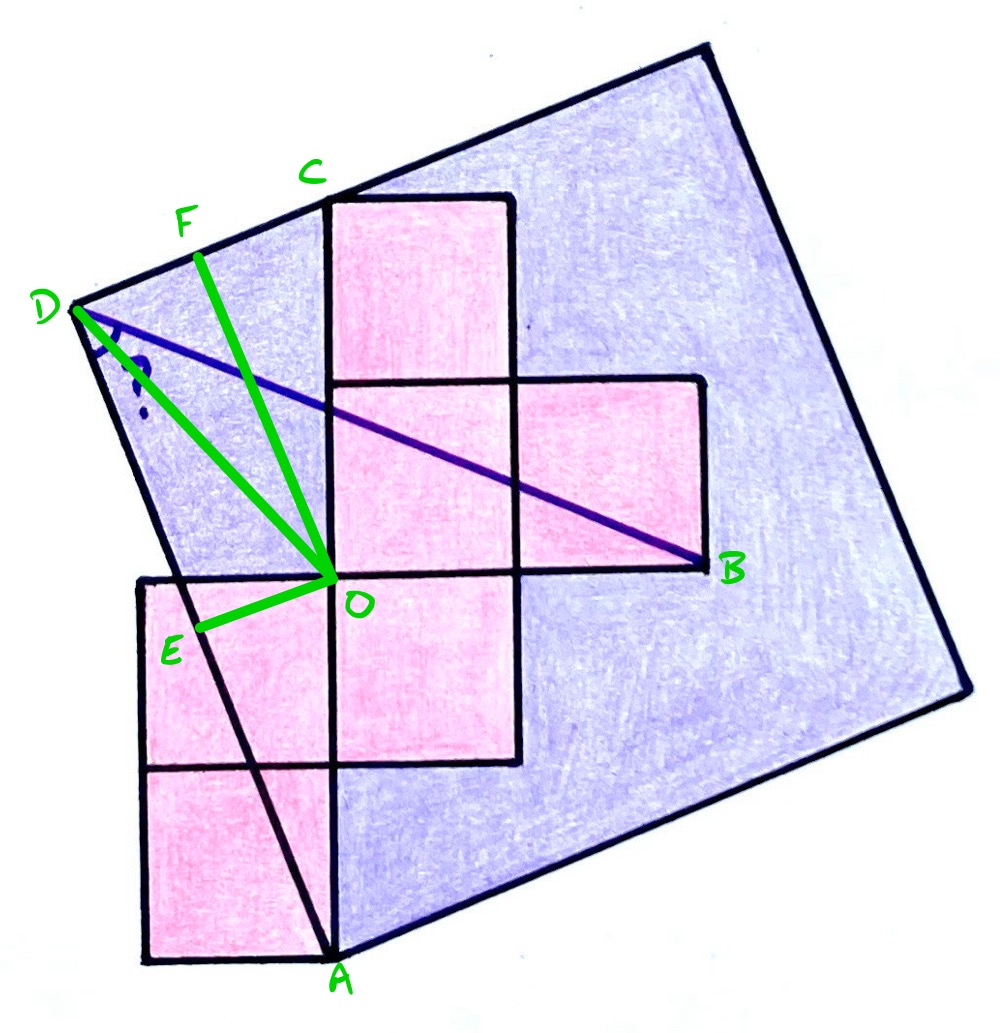
In the above diagram, and are so that and are perpendicular to and respectively. Triangles and are congruent because and have the same length, so is at the midpoint of . This means that triangle is also congruent to , so also has the same length as .
Hence triangles and are each isosceles. So the sum of angles and is equal to angle , meaning that the sum of the angles inside quadrilateral is , where the latter is taken inside the quadrilateral. That angle is and so, since the angles in a quadrilateral add up to , angle is .
Solution by Invariance Principle
The larger square can tilt in relation to the arrangement of smaller squares, giving configurations where the answer can be more simply deduced.
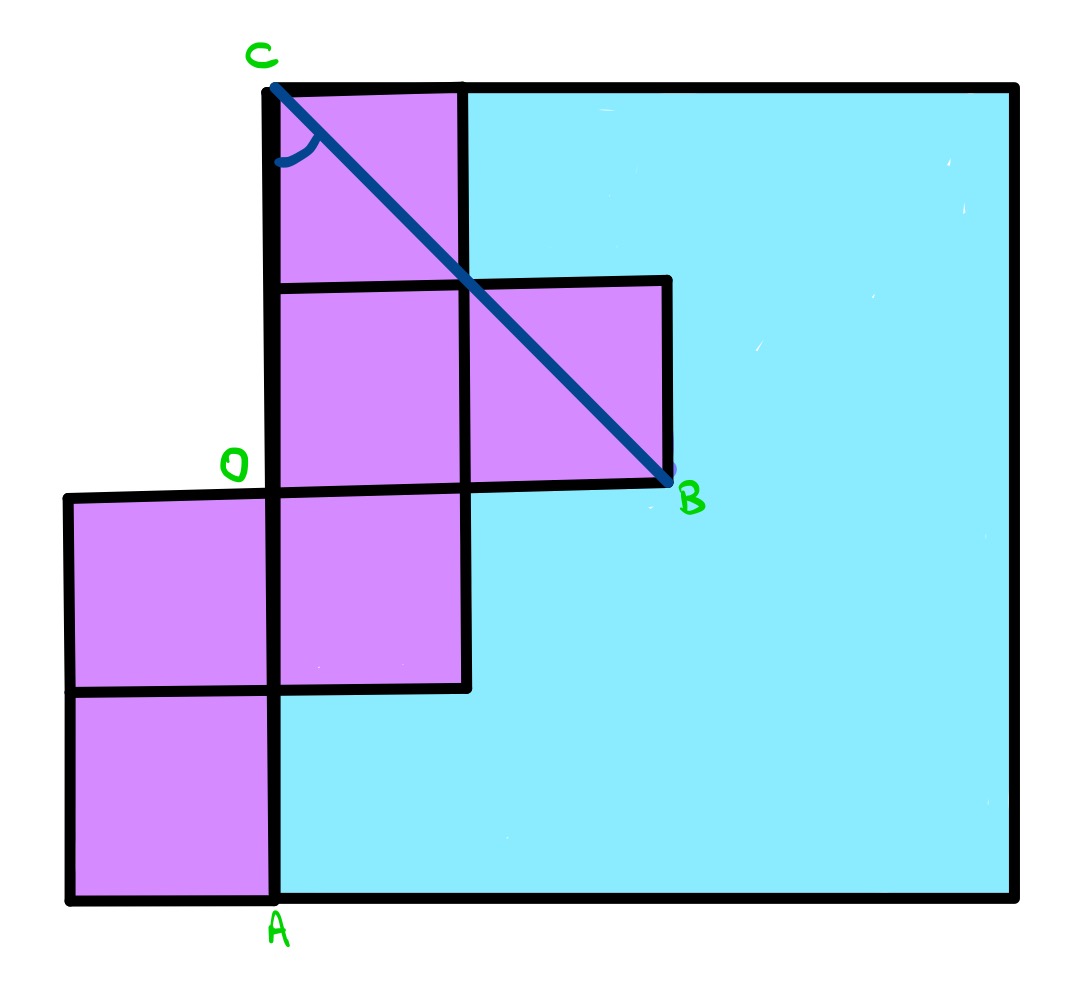
In this configuration, point aligns with , meaning that angle coincides with the diagonal in the upper left square, whence is .
In this configuration, is such that is a straight line and the corners of the large square are at , , , and , whence angle .