Notes
four squares xii solution
Solution to the Four Squares XII Puzzle
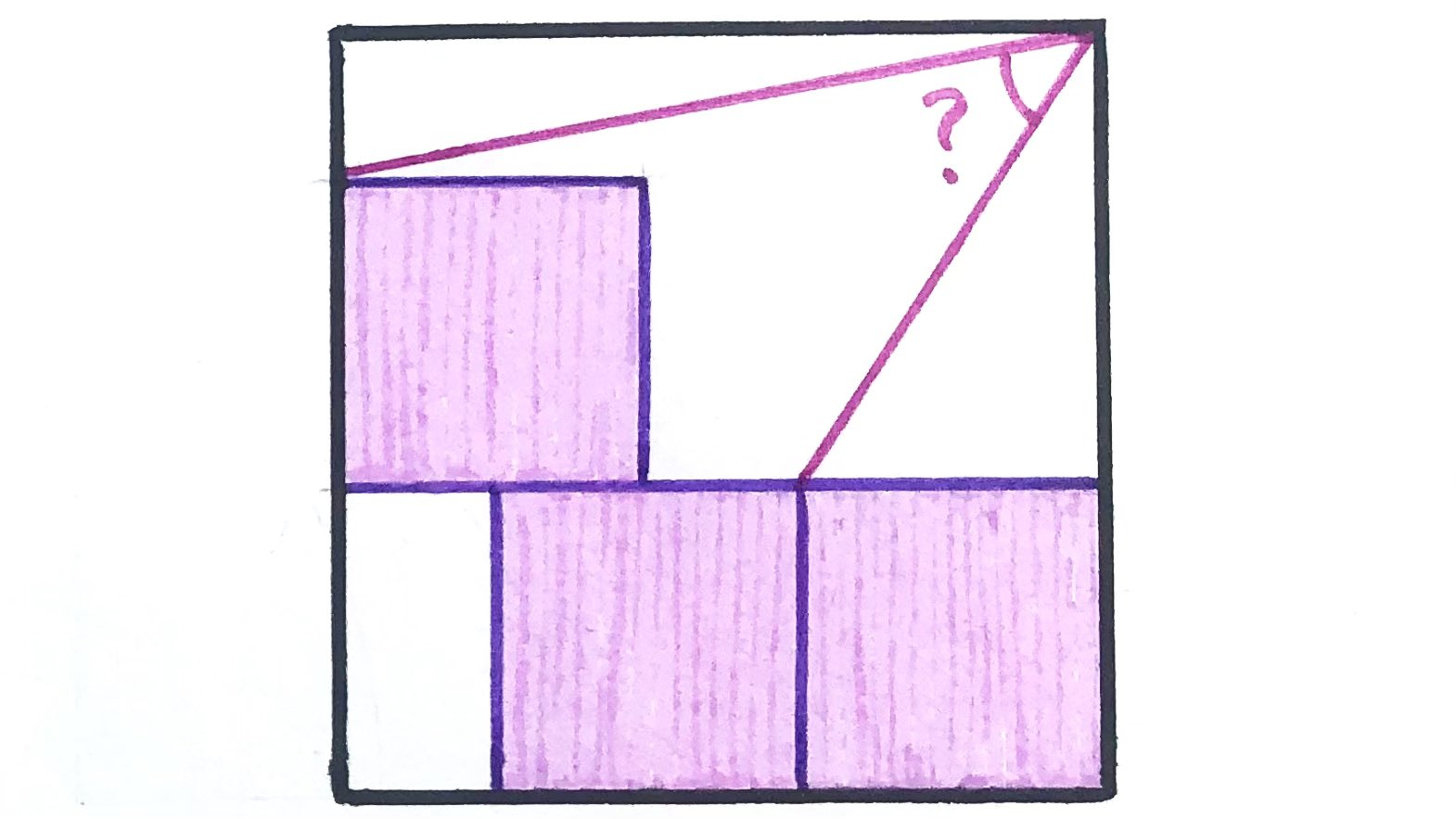
The three smaller squares are the same size. What’s the angle?
Solution by Properties of Isosceles Triangles, Angles in a Triangle, and Angles at a Point on a Straight Line
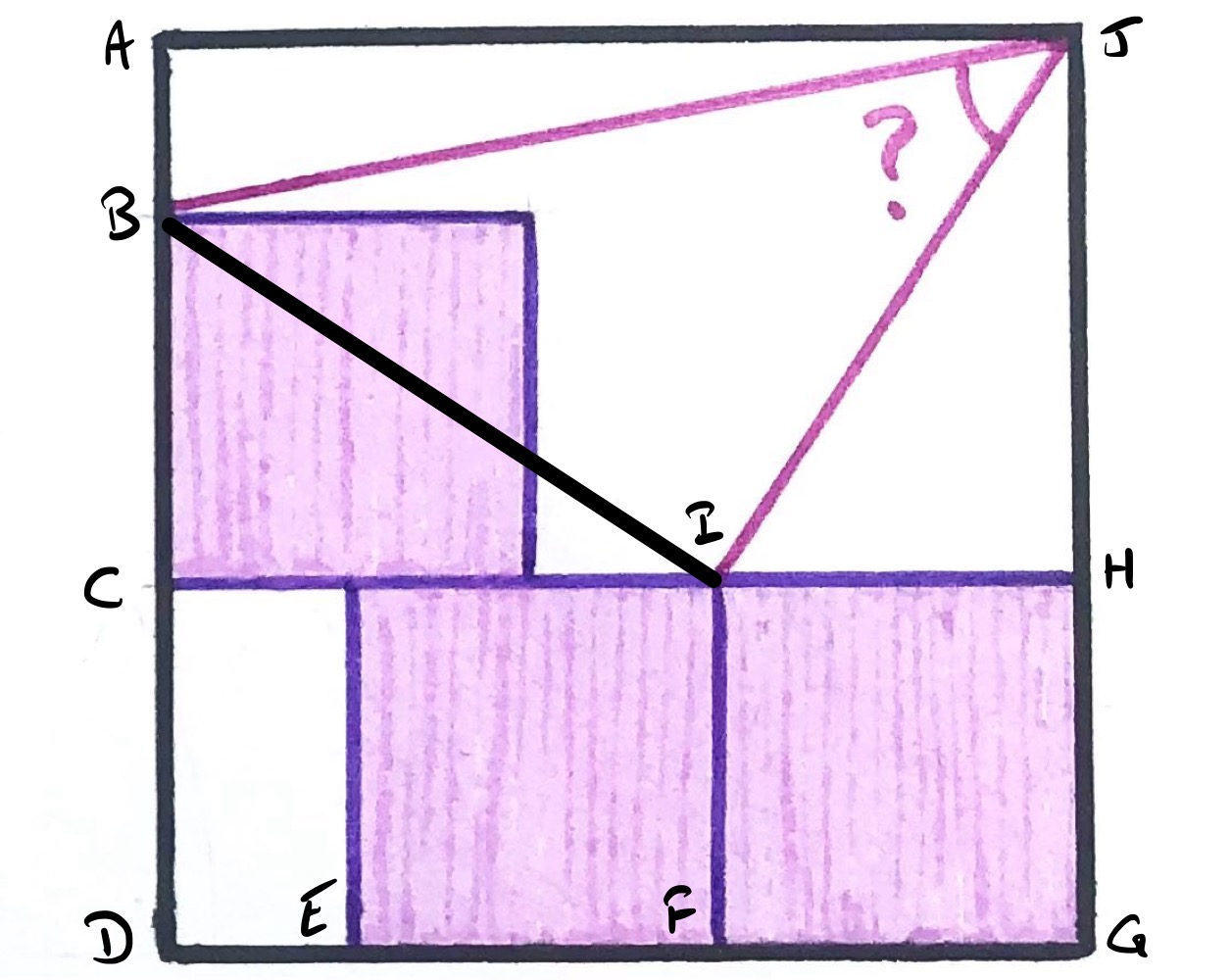
With the points labelled as above, consider triangles and . Both are right-angled. The sides and are sides of the purple squares and so have the same length. The sides and are the difference between the side of the outer square and one purple square, so have the same length. Therefore, triangles and are congruent so triangle is isosceles.
Angles and add up to since the angles in a triangle add up to , so since angles at a point on a straight line add up to , angle is .
Therefore, angle is half of , so is .
Solution by Invariance Principle
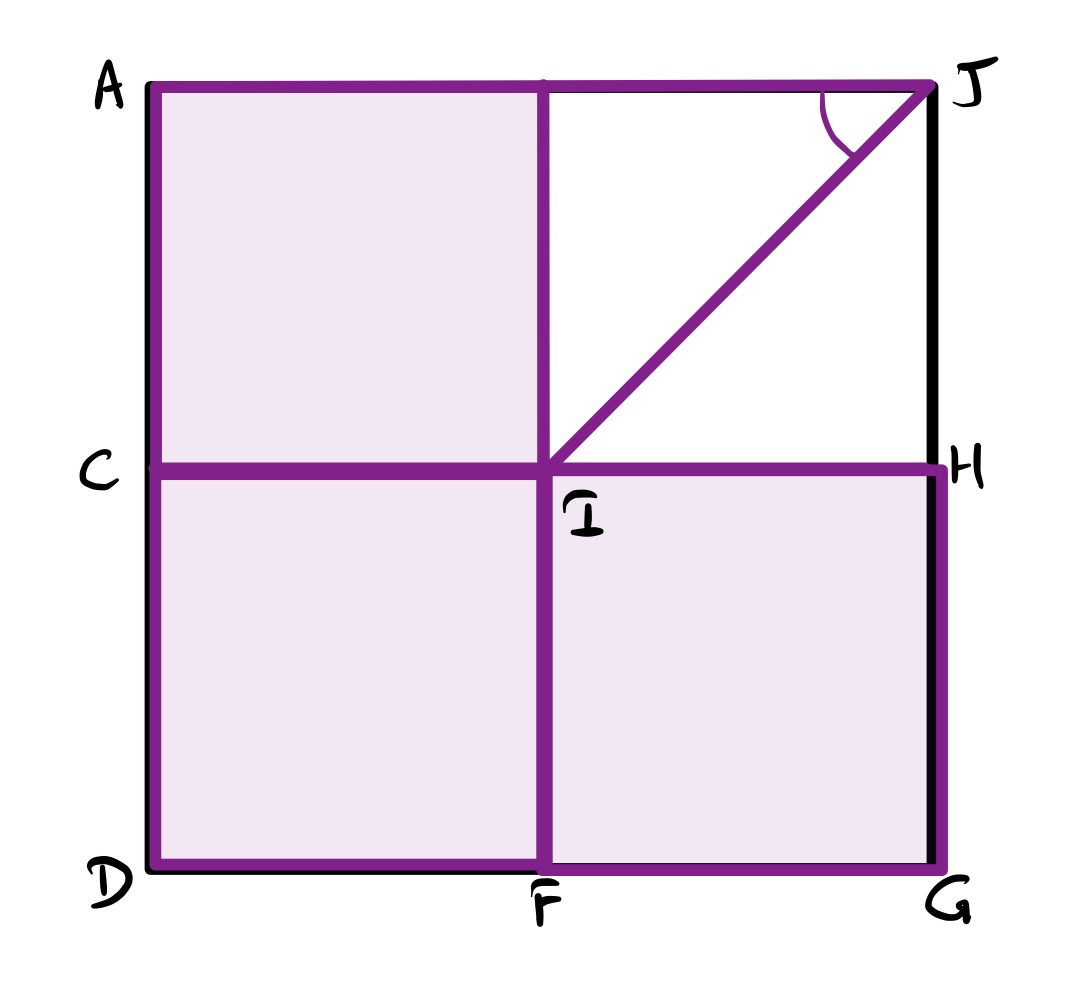
The size of the outer square can vary, so drawing it as small as possible produces the configuration as above, from which the angle is clearly .