Notes
four squares xi solution
Solution to the Four Squares XI Puzzle
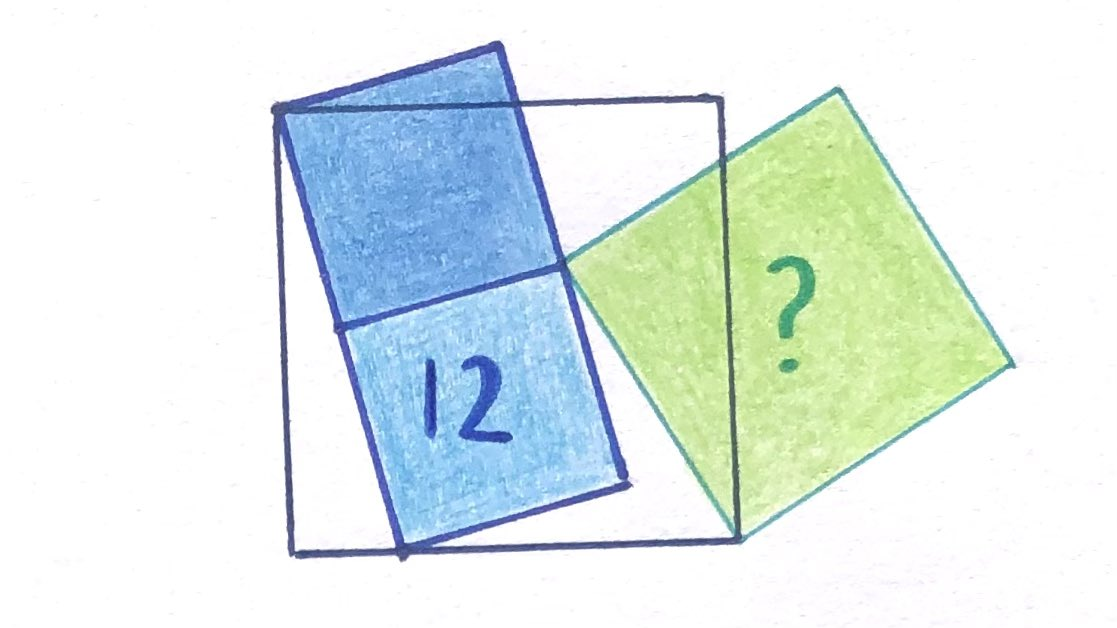
Four squares. What’s the green area?
Solution by Symmetry and Lengths in Squares
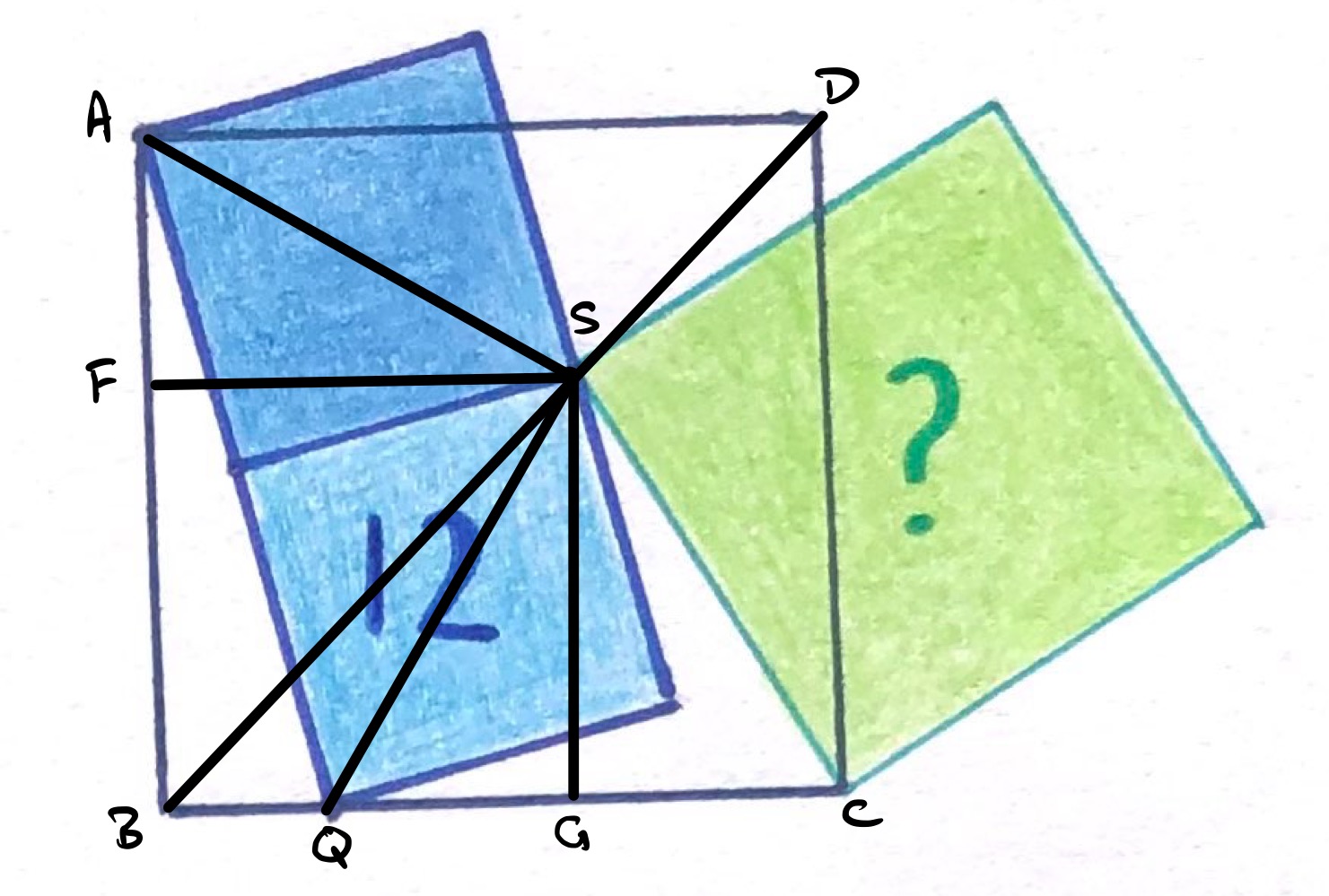
Consider the diagram as labelled above, in which the line segment is perpendicular to , and is perpendicular to .
Rotating the upper blue square anti-clockwise about brings it to lie on top of the lower blue square, with brought to . Therefore, applying the same rotation to the line segment means that it starts at and lies along , similarly rotating starts at and lies along . Putting these together means that rotates to and so triangle rotates to triangle .
Hence line segments and are the same length which means that lies on the diagonal of the black square. This in turn means that line segments and have the same length, so the side length of the green square is the length of the diagonal of the blue.
Therefore, by properties of squares, the green square has area twice that of the blue, so has area .
Solution by Similar Triangles and Lengths in Squares
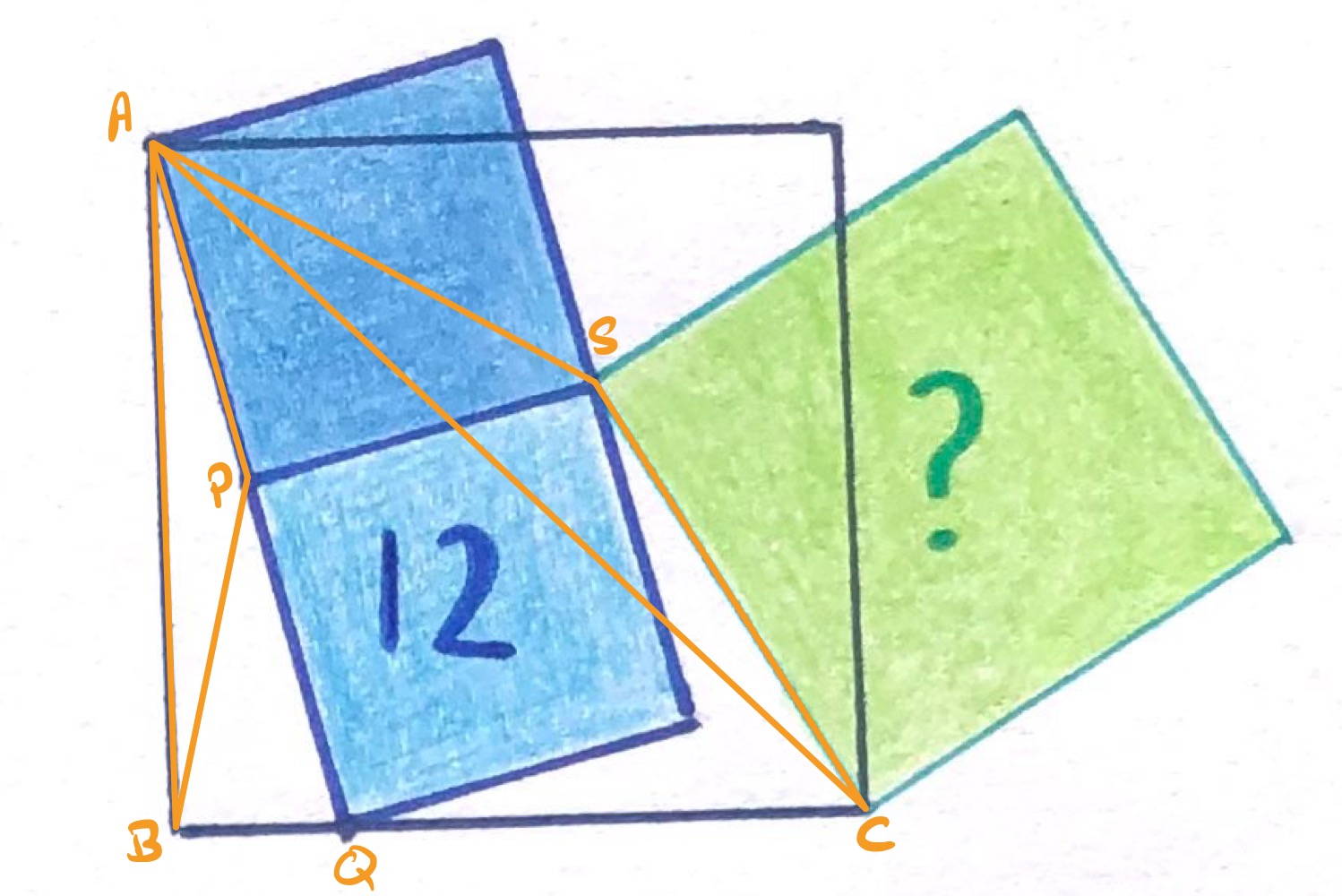
With the diagram labelled and annotated as above, consider triangle . This is isosceles as is the midpoint of the line segment .
Now consider triangle . This is obtained from triangle by a rotation anti-clockwise about together with a scaling by . To see this, note that this combined transformation is what takes an adjacent side of a square to an opposite one, and therefore takes to and to while leaving where it is.
Therefore, triangle is isosceles and so has the same length as . From this, the area of the green triangle is seen to be .
Solution by Pythagoras' Theorem
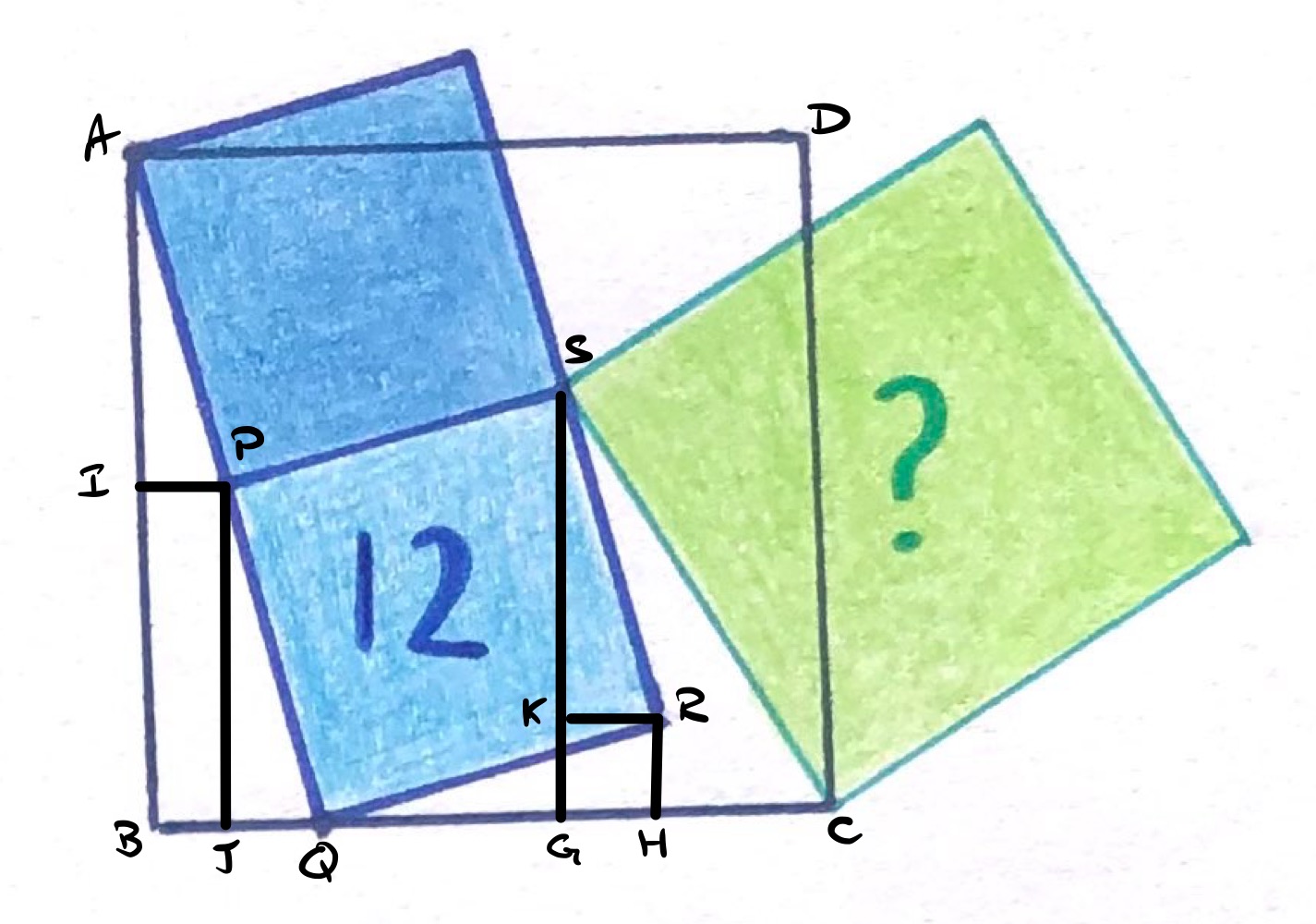
With the points labelled as above, line segments and are perpendicular to and respectively. As before, is perpendicular to , and and are perpendicular to and respectively.
Let have length , have length , and have length . Then from Pythagoras' theorem:
Triangles and are similar as both are right-angled and share an angle at . Since has twice the length of , the scale factor is and so has length and has length .
Triangle is a rotation of triangle , so line segment has length . Triangle is a translation of triangle , so line segment has length , meaning that line segment also has length .
To find the length of line segment , consider it as the length of with and removed, and then put back in. This is .
Now consider triangle . Let be the length of , then has length from above, and has length , so using Pythagoras’ theorem:
Then , since that is the area of a blue square, so and the area of the green square is .
Solution by Angle at the Centre is Twice the Angle at the Circumference
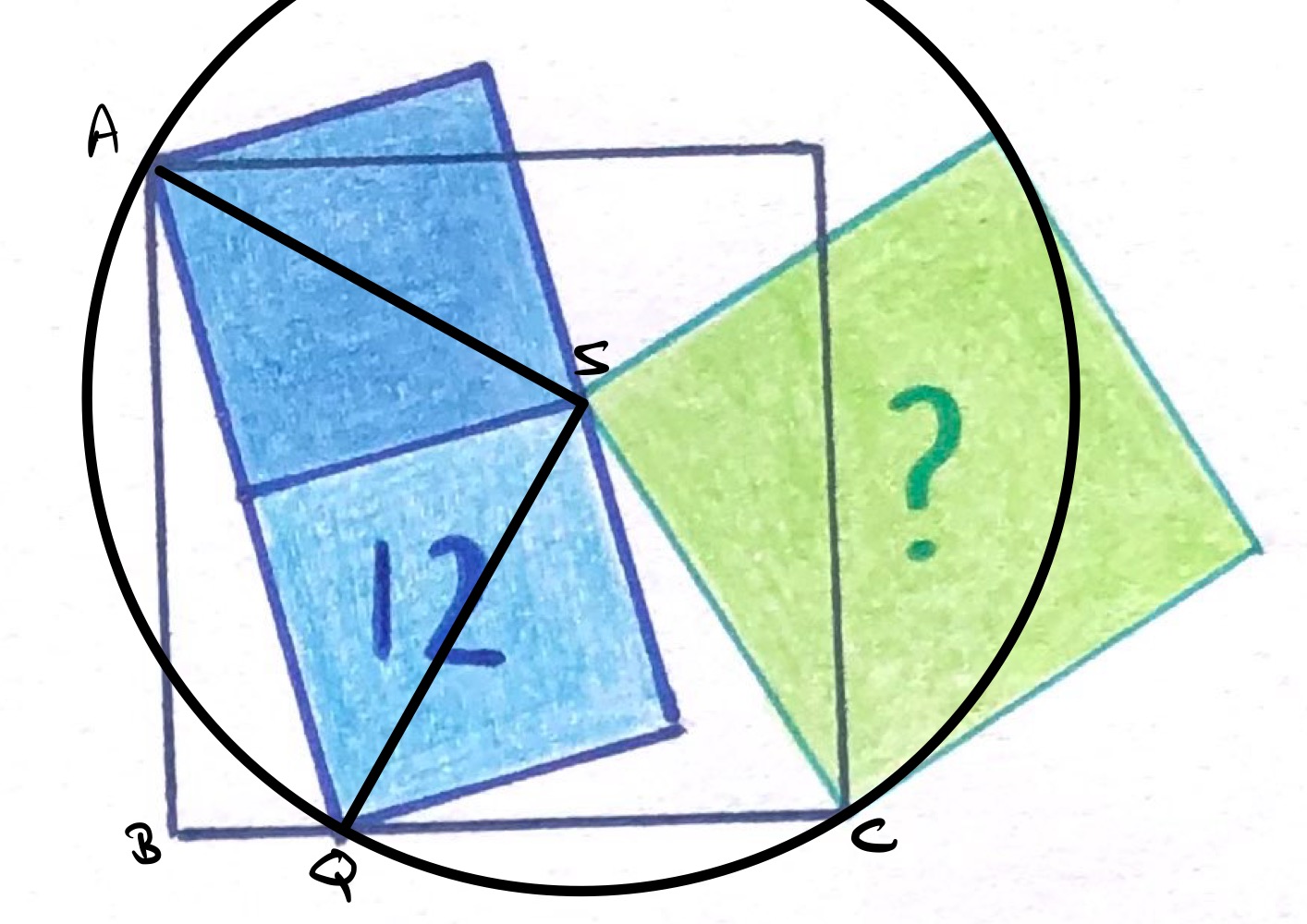
In the above diagram, the circle has centre and passes through point . Since the line segment has the same length as , this circle also passes through .
Angle is , as it is the angle between the two diagonals of the squares. Angle is as it is the angle between the diagonal and a side of the black square. Therefore, by the converse to the angle at the centre is twice the angle at the circumference, point also lies on the circle. Therefore line segment has the same length as .
So the side length of the green square is the same as the length of the diagonal of the blue square. Hence the area of the green square is twice that of the blue, so is .
Solution by Invariance Principle
The point where the blue squares meet the bottom edge of the black square can slide along the line through and (including outside the square) and there are multiple configurations that yield straightforward solutions.
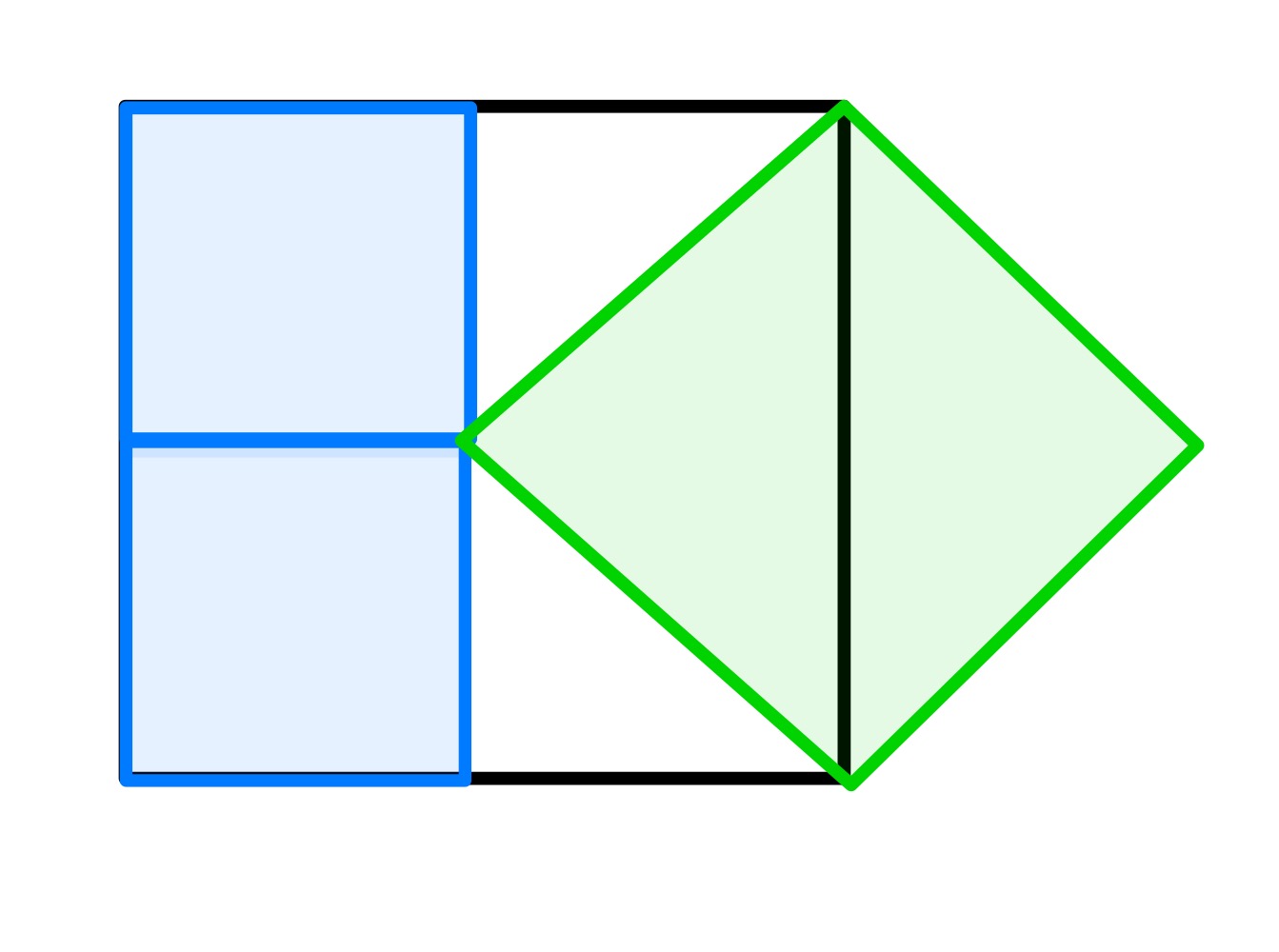
In this configuration, the point is at , so the blue squares are vertical and the green diagonal.
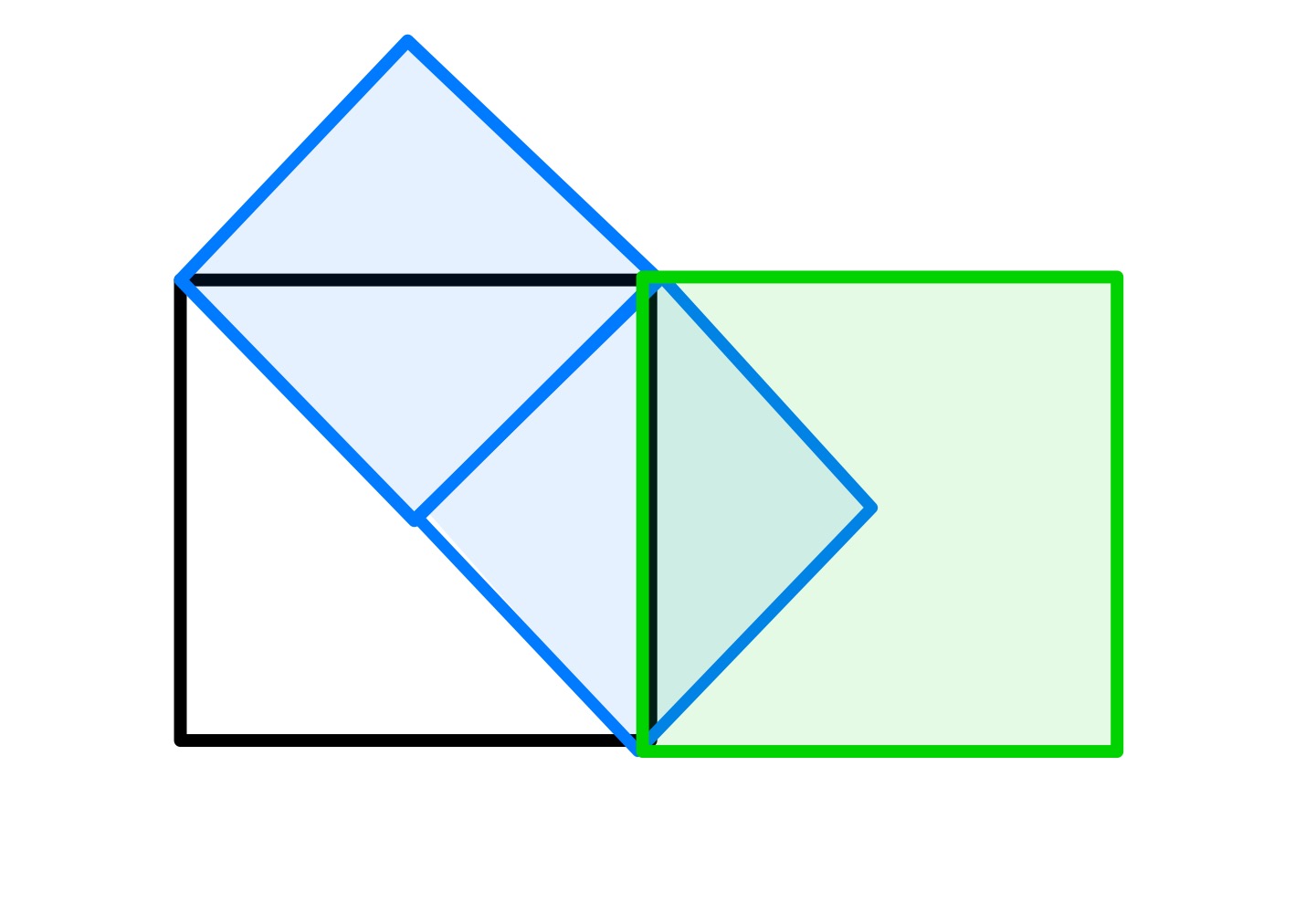
In this configuration, the point is at , so the blue squares are diagonal and the green is vertical.